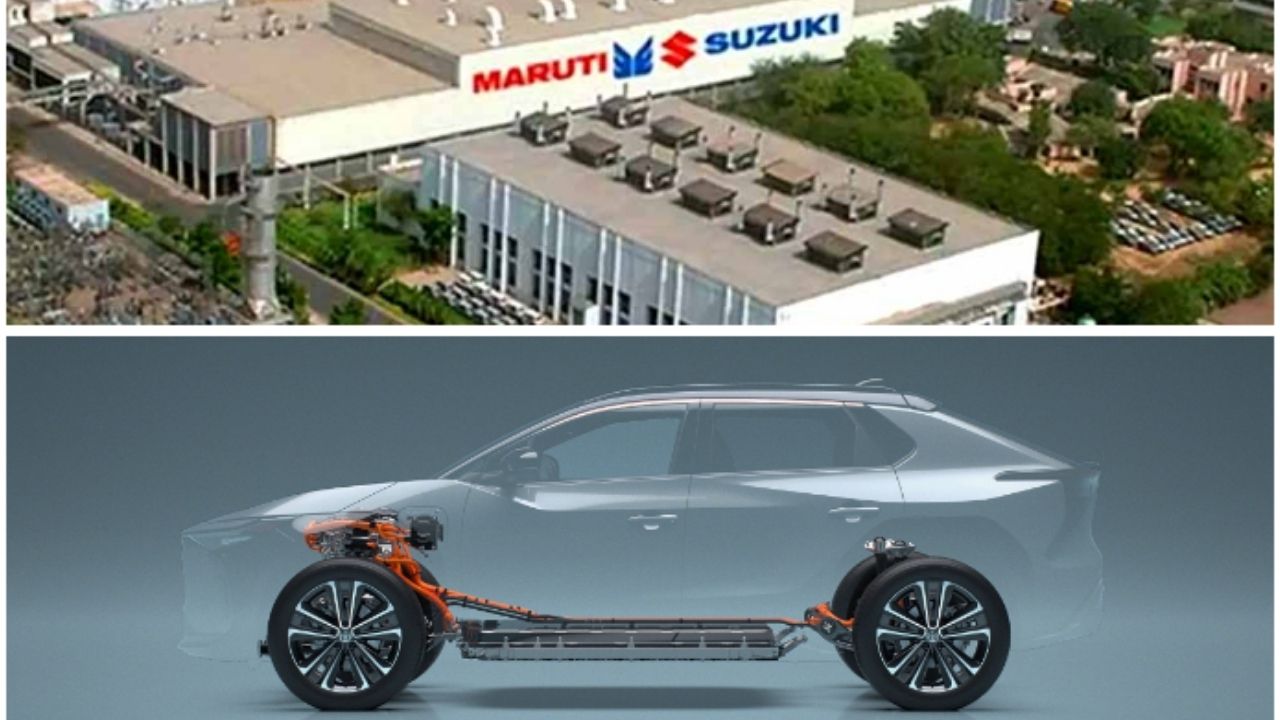
Maruti Suzuki India is preparing for a large scale electric vehicle expansion in the second half of this decade, with a plan that combines local battery production, a wider EV line up, and a big focus on charging and service readiness. The company says it currently imports batteries, but localisation is planned in phases over the next few years. The goal is to strengthen the EV ecosystem in India and build enough buyer confidence for electric cars to become a primary household vehicle, not just a second car used for short city runs.
This strategy becomes more important as Maruti Suzuki gets ready to introduce its first electric SUV for the Indian market, the e VITARA, which is expected to arrive next year. While EV interest is rising, the company believes the market will not scale meaningfully unless customers feel confident about real world driving range, the availability of public charging, after sales support, and resale value. Maruti’s leadership has openly acknowledged that early EV experiences in India created concerns in the minds of many consumers, particularly around range expectations and charging convenience. That is why the company is trying to prepare the ecosystem alongside the product.
Maruti Suzuki’s broader roadmap is aligned with its plan to have five electric models in its portfolio by the fiscal year 2030. The company expects the passenger vehicle market to grow substantially by then, while EV penetration could rise to the low teens in percentage terms. However, it has also indicated that market forecasts may need reassessment due to policy and taxation changes that can influence the price gap between internal combustion vehicles and EVs. In other words, Maruti expects growth, but it also wants the flexibility to recalibrate targets based on how demand evolves and how costs and incentives shift.
Why Maruti Suzuki is prioritising battery localisation
Localising battery production and other key components is a major step for any automaker trying to scale EVs in India. Batteries represent a large share of EV cost, and importing them can expose companies to currency swings, supply chain disruption, and higher landed costs. A phased localisation plan gives Maruti Suzuki the ability to control costs better over time and reduce dependency on imports.
Just as importantly, localisation supports long term service and parts availability. For buyers, the decision to switch to an EV is not only about purchase price. It is also about long term peace of mind. A stronger local supply chain can translate into better availability of replacement components, more predictable maintenance support, and improved ownership experience, all of which help increase confidence.
Short summary table
Field |
Details |
|---|---|
Company |
Maruti Suzuki India |
Core plan |
Localise batteries and critical EV components in phases |
EV portfolio target |
Five EV models by 2030 |
Charging plan |
About 1 lakh charging stations by 2030 through partnerships |
Service plan |
Around 1,500 EV enabled workshops across about 1,100 cities |
Current progress |
About 2,000 charging points already set up |
Customer support |
Assured buyback and subscription options planned |
Official site link |
The biggest hurdles to EV adoption in India
Maruti Suzuki has highlighted a few key reasons why many Indian buyers still treat EVs as a secondary car.
Driving range confidence remains a major factor. Many customers compare brochure range figures with real world performance in heavy traffic, high heat, highway cruising, and varied driving styles. If early adopters report disappointing outcomes, it can influence broader public perception.
Public charging coverage and reliability is another major hurdle. When charging is not easily accessible or when it is perceived as inconsistent, buyers hesitate to rely on an EV as the main family vehicle.
After sales readiness is also critical. EV ownership requires workshops trained to handle high voltage systems, diagnostics, and specialised parts. Without a widespread support network, buyers fear downtime or service uncertainty.
Resale value is often overlooked but heavily influences Indian purchase decisions. Many customers calculate their total cost of ownership with resale expectations in mind. If the resale story is unclear, they delay adoption.
Maruti Suzuki’s plan attempts to address all these factors in parallel, not one by one.
Charging expansion plan for 2030
A standout part of Maruti Suzuki’s roadmap is the plan to enable about 1 lakh charging stations by 2030. The company intends to work with dealer partners and charging point operators to expand access. This approach matters because dealers already have physical presence, customer relationships, and service infrastructure, making them a natural anchor for charging growth in many cities.
Maruti has also stated it has already established about 2,000 charging points, which helps create an early foundation. The 2030 goal is ambitious and will require steady rollout, strong uptime standards, and smart placement that supports both city driving and intercity travel corridors.
Service readiness with EV enabled workshops
To reduce ownership anxiety, Maruti Suzuki plans around 1,500 EV enabled workshops across about 1,100 cities. This is designed to ensure that EV owners are not limited to a few metro areas for service. A wide workshop network also signals seriousness and long term commitment to EVs.
For a mass market brand like Maruti Suzuki, service coverage is a key competitive advantage. If the brand can offer EV service reach similar to its internal combustion coverage, it can make first time EV buyers feel far more comfortable.
Customer confidence features including buyback and subscription
Maruti Suzuki has also spoken about adding ownership support options such as an assured buyback scheme and a subscription scheme. These can directly address resale value fears.
An assured buyback plan can provide customers with a clear exit value path, reducing uncertainty. A subscription option can attract customers who want to experience EV ownership without committing to long term depreciation risk.
Together, these tools can make EV adoption feel less risky for households that are still evaluating whether EVs suit their daily driving needs.
The e VITARA and Maruti Suzuki’s EV momentum
Maruti Suzuki’s first electric model for India, the e VITARA, is expected to play a pivotal role in shaping the brand’s EV image. The company has also indicated it has already begun exports of the e VITARA and has shipped a sizable volume to multiple markets, reflecting a global approach to EV scale.
This export angle is important because it suggests the product is being developed to meet wider market expectations, not just a single region. For Indian buyers, global scale can also signal stronger engineering validation and a larger ecosystem of learnings and improvements over time.
What to expect next on the road to 2030
Over the next few years, buyers should watch for three major developments from Maruti Suzuki.
First is the rollout timeline for localisation and how quickly battery and component sourcing shifts closer to home.
Second is how the charging partnership plan translates into real charging availability, not just announced targets. Station placement, uptime, payment experience, and speed all matter.
Third is how the five model EV portfolio is structured. Body styles, price bands, and feature positioning will determine how effectively Maruti can attract both first time EV buyers and upgraders.
If Maruti can deliver on product quality while building the ecosystem around it, it could significantly accelerate EV adoption among mainstream Indian car buyers.
FAQs
1. What is Maruti Suzuki planning for EV batteries in India
Maruti Suzuki plans to localise battery production in phases over the next few years as part of building a stronger EV ecosystem.
2. How many electric vehicles does Maruti Suzuki aim to have by 2030
The company targets five EV models in its portfolio by 2030.
3. What is Maruti Suzuki’s charging infrastructure plan for 2030
Maruti Suzuki plans to enable about 1 lakh charging stations by 2030 through partnerships with dealers and charging point operators.
4. How is Maruti Suzuki preparing after sales support for EVs
Maruti Suzuki plans around 1,500 EV enabled workshops across about 1,100 cities to support EV owners.
5. How will Maruti Suzuki address resale value concerns for EV buyers
The company has indicated plans for an assured buyback scheme and subscription options to reduce resale and ownership risk.
If you want, I can also rewrite this in a more aggressive news style with a click focused headline, while still keeping your no symbol rule and the same structure.
For More Information Click HERE